Culinary Travel

A Week in Calabria: Day-by-Day Guide to the 2026 Food Fest Experience

Eight days. Eight days of sea air, slow mornings, chefs who mean it, and food that rewrites what you thought Italy was. You’ve seen the photos of Tuscany. You’ve booked Amalfi twice. You think you know Italy. You don’t know Calabria, where Italy begins. And that’s exactly why you should be here on June 16th. The Calabria Food Fest 2026 is not a food tour. It’s not a cooking class wrapped in a vacation package. It’s an eight-day immersion into the region that gave Italy its spine — its heat, its flavors, its stubbornness to stay itself. This is the Tour. Here’s what it looks like, day by day. Day 1 — Welcome. Aperitivo. The Sea. You land at Lamezia Terme Airport, and a private transfer takes you to your hotel. The window rolls down, and the Ionian coast appears. The water is that color, the one that shouldn’t exist outside of a filter. You check in. You breathe. That evening, we head to Soverato, one of the most beautiful towns on the Ionian coast, for an apericena at Brezza Fish & Chill, the beachfront restaurant led by Michelin-starred chef Luca Abbruzzino. The food is refined. The setting is almost unreasonably beautiful. The conversation flows the way it only does when everyone around you has just arrived and realized they made an excellent decision. Stay out. Walk the promenade. Get an artisanal gelato. Let Soverato show you what evenings in Southern Italy actually feel like. Day 2 — Flour, Nonna, and the Pasta That Started Everything After breakfast, we go inland. First stop: a local Calabrian flour mill, where you learn how regional grains are processed, the foundation of a cuisine that begins long before the stove. Then you meet her. The Official Nonna of Calabria Food Fest 2026. She teaches you to make pasta by hand. Her hands know things your hands are still learning. She shares the shapes, the pressure, the feel of dough that’s right, and the family stories that come with it. Lunch is at Agriturismo Fassi, a countryside estate that adds a small petting zoo to its already considerable charm. The afternoon is yours: the sea, the shops, a book on the terrace. Dinner is wherever you want it. Ask the locals where they actually eat. The answers are never obvious. That’s the point. Day 3 — Ricotta at Dawn, Ceramics at Dusk You visit a family-run farm tucked into the Calabrian hills. There, you watch ricotta being made the way it has always been made, and then you eat it warm, straight from the process, with nothing to distract from what it actually tastes like. Lunch is farm-to-table in the purest sense: zero-kilometer ingredients, handmade dishes, the kind of meal that makes restaurant menus feel like a performance. The afternoon brings an optional excursion to Squillace, a hilltop village where local artisan families still practice a centuries-old ceramic tradition. These aren’t souvenir pieces. These are living crafts, passed down through generations. Tuscany has the tourists. Calabria has the truth. Day 4 — Market Morning, Dinner Overlooking the Gulf The morning belongs to the Soverato market, seasonal produce, traditional foods, handcrafted goods, and locals who have been shopping here their whole lives. Walk slowly. Buy things you can’t name yet. The afternoon is open. Beach, shopping, optional fitness by the sea, the kind of rest that feels earned. Then, as the sun drops over the Gulf of Squillace, we gather for dinner at Blu70,  a venue set among the rocks with a view that requires no description. Refined cuisine. A magical atmosphere. One of those evenings people reference for years. Soverato’s nightlife starts late and goes longer than you expect. You’ve been warned. Day 5 — The Calabria Food Fest, Second Edition Morning on the beach. The Ionian is yours,  crystal-clear water, warm sand, zero agenda. At 7:00 PM, everything changes. We travel to the Castello di Squillace for the Second Edition of the Calabria Food Fest. Inside the castle walls: live show-cooking by renowned chefs, tastings of traditional Calabrian products, and a festival atmosphere that is festive in the Italian sense, which is to say, deeply serious about pleasure. This is the event. This is what the week has been building toward. This is an exclusive, invitation-only event. You’re in. Day 6 — The Gala Dinner at the Castle One more slow morning. One more swim. Lunch at leisure. Then you dress well and return to the Castello di Squillace. The Gala Dinner is the closing act of the Calabria Food Fest, Second Edition. Exceptional food. Fine Calabrian wines. A table full of people who have spent a week together and know it was worth it. Centuries of history overhead, the Ionian coast below. You toast. You mean it. “Arrivederci” is not goodbye. It’s a promise to return. Day 7 — Pizzo, Tropea, and the Tartufo You Will Dream About The final travel day begins with a stop in Pizzo Calabro for its legendary tartufo gelato,  a Calabrian institution, chocolate fudge at the core, made by people who take frozen desserts as seriously as their cuisine deserves. Then: Tropea. The pearl of the Tyrrhenian Sea. You check in, decompress, and in the evening visit the Masicei Vineyard for a tasting of local products and a sunset over one of the most photographed views in Southern Italy. Except this time you’re not looking at a photo, you’re in it. Day 8 — Arrivederci, Calabria After a week of flavors, friendships, and memories that landed before the jet lag lifted, it’s time to leave. Your suitcase is heavier with olive oil you shouldn’t have packed and a jar of ‘nduja that security flagged twice. Your phone has more photos than you’ll ever post. Your sense of what Italy is has been permanently adjusted. You leave Calabria the way everyone leaves Calabria: already thinking about coming back. Ready to go? The 2026 tour runs June 16–23. Spots are almost gone. 2026 is almost full — 2027 spots

A Week in Calabria: Day-by-Day Guide to the 2026 Food Fest Experience Read More »
Where Italy Begins: The Story Behind Calabria Food Fest 2026

Italy is a word the whole world knows. But very few people know where it came from. The name didn’t originate in Rome. It didn’t start in Florence, Venice, or the Amalfi Coast. It began here, at the southern tip of the peninsula, where the land rises from the waters of the Mediterranean, and the ancient Greeks set foot on a territory so extraordinary they gave it a name that would eventually belong to an entire nation. That place is Calabria. And in June 2026, it becomes the stage for an experience unlike anything else in culinary travel. Calabria Food Fest 2026. Where Italy begins. The First Italy For the Greek colonists who arrived on these shores thousands of years ago, Italia meant Calabria. This was the first Italy, geographically, historically, and culturally. The land where the continent emerges from the sea. The place where European civilization took some of its earliest, deepest roots. And yet, for most modern travelers, Calabria remains a mystery. Overshadowed by the north, overlooked by the itineraries, and underestimated by the guidebooks. Which is precisely why it still holds something the rest of Italy has lost: authenticity. Unhurried rhythms. A food culture that has never needed to perform for tourists because it was always made for living. Calabria Food Fest was built to bring travelers directly into that living culture: not as observers, but as participants. What Is Calabria Food Fest? Calabria Food Fest is an itinerant culinary and cultural tour through Southern Italy’s most extraordinary and least-discovered region. Designed for small groups, it moves through the landscapes, communities, and flavors of Calabria across five immersive days, June 16 to 23, 2026. It is not a food festival in the conventional sense. There is no general admission, no crowd, no wristband. There are no stages with celebrity chefs performing for strangers. Instead, Calabria Food Fest delivers a series of exclusive, curated experiences built around three pillars: Calabria. The territory itself, its coast, its mountains, its ancient towns, its living archaeological heritage. The Ionian Sea at sunrise. Secluded bays that don’t appear on travel maps. Hill villages where the streets still smell of wood smoke and wild herbs. Food. Not as a commodity or a spectacle, but as the primary cultural act of Mediterranean civilization; exactly as the ancient myths described it millennia ago, and exactly as Calabrian communities still practice it today. Farm-to-table isn’t a marketing term here. It’s simply how life works. Fest. Because discovery is most meaningful when it’s shared. The festival spirit: convivial, open, celebratory, runs through every moment, from an informal agriturismo lunch to a gala dinner under the stars inside a medieval fortress. The 2026 Experience: A Journey Through Living Calabria Exclusive Access to the People and Places That Define the Region The Calabria Food Fest itinerary takes guests inside the region’s most authentic food producers: olive mills, traditional dairies, family-run wineries, and farms where the recipes haven’t changed in generations. These are not tourist demonstrations. They are working operations opened exclusively for CFF guests, hosted by the people who live and breathe Calabrian food culture. At Agriturismo Fassi, guests join a pasta-making class led by the hands that have shaped fileja and pitta ’mpigliata for decades; a session that has become one of the most talked-about moments from previous CFF editions. From the vineyard to the frantoio. From warm ricotta lifted directly from the vat to ’nduja cured in the traditional Calabrian way. Every stop is a masterclass in what Southern Italian food actually is when it’s not filtered through a restaurant menu. Cultural Itineraries Beyond the Table Calabria Food Fest is not only about food. It is about understanding the civilization that produced it. Guests move through archaeological sites that predate Rome, literary itineraries that trace the region’s Greek and Byzantine legacy, and landscapes that feel, at times, as if they have been untouched since antiquity. Between experiences, there is space for white sandy beaches, quiet coastal drives, and moments of genuine rest in a region that does not rush. This is the slow travel that a growing number of culinary travelers are actively seeking, and finding it anywhere else in Italy is increasingly difficult. The Grand Finale: Castello di Squillace The 2026 edition culminates at one of Calabria’s most dramatic and evocative historic landmarks: the Castello di Squillace, a fortified castle overlooking the Ionian Sea. For two evenings, it opens exclusively to Calabria Food Fest guests. Saturday evening: An aperitivo alla Calabrese inside the castle walls; live performances of traditional and contemporary Mediterranean music, ceramics workshops led by local artisans, and tastings of the region’s finest olive oil, bread, and wine. An evening that feels simultaneously ancient and entirely alive. Sunday evening: The gala dinner. Premium chefs from the Calabrian territory, exceptional local ingredients, and live classical music. A formal celebration that transforms a medieval fortress into the most memorable dining room in Southern Italy. The Castello di Squillace has historically been a place of defense; walls built to keep the world out. Calabria Food Fest inverts that logic completely. These ancient stones now exist to welcome guests in, to host the most convivial and open expression of Calabrian identity. Not a postcard. Not a museum piece. A living monument. Who This Experience Is For Calabria Food Fest is built for travelers who have done the Amalfi Coast. Who have eaten in Florence and walked the Uffizi and stood in the Colosseum. Who know Italy well and are starting to wonder whether they’ve actually seen it at all. It is for the traveler who reads the menu before booking a trip. Who wants to meet the person who made the wine, not just the sommelier who poured it. Who values intimacy over spectacle and memory over convenience. It is for the Italian diaspora: the Italian-Americans, Italian-Canadians, Italian-Australians, who carry Calabrian heritage and have been waiting for a way to return that feels meaningful, not touristic. And it is for anyone who believes that the most important

Where Italy Begins: The Story Behind Calabria Food Fest 2026 Read More »

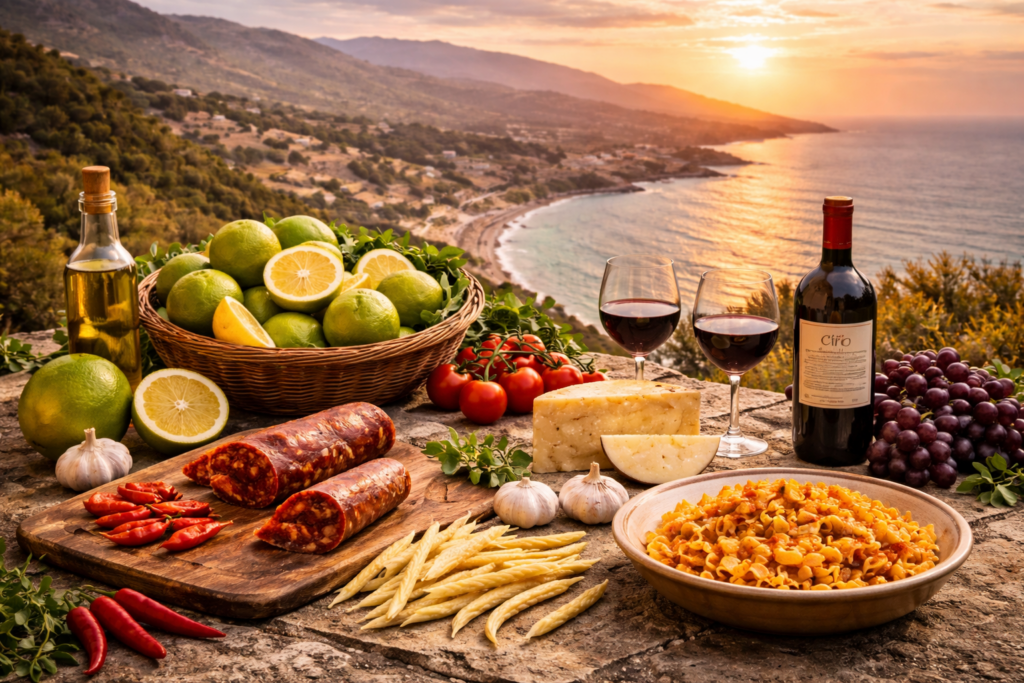
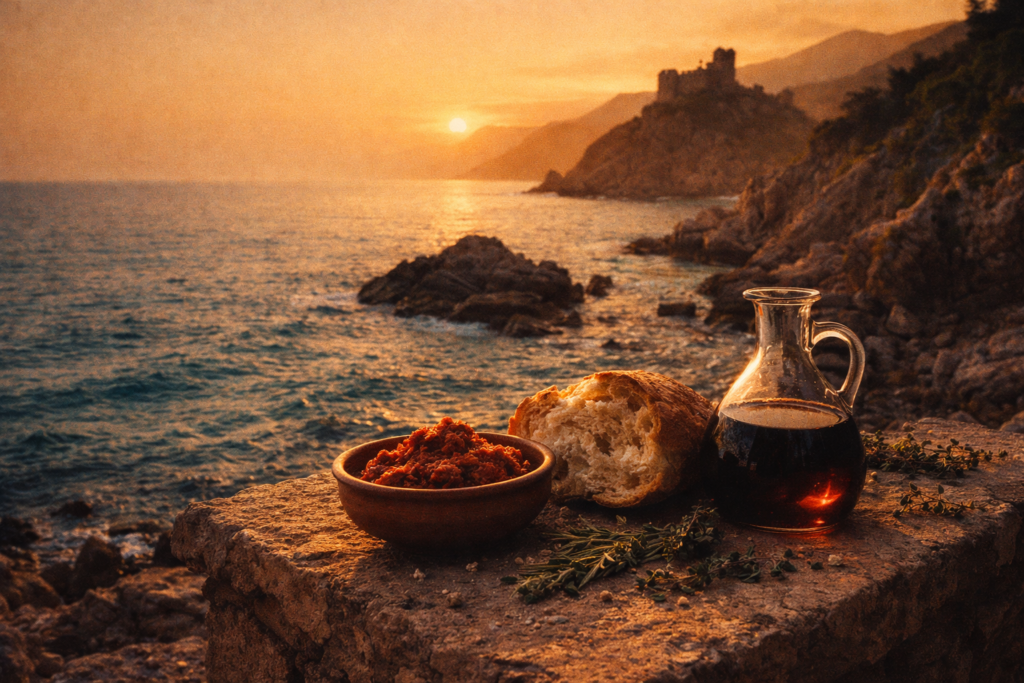
Traditional Calabrian village at golden hour with fileja pasta, 'nduja and bergamot — Calabria Food Fest

Why Calabria Is Italy’s Most Misunderstood Culinary Region

When people talk about Italian food culture, the conversation gravitates north. Bologna gets the ragù. Naples gets the pizza. Sicily gets the arancini. Calabria, the sun-scorched toe of Italy’s boot, gets overlooked. That’s a mistake. And it’s becoming harder to sustain. Calabria’s cuisine is not a regional footnote. It’s a living archive of 2,500 years of Mediterranean civilization, shaped by Greek colonists, Byzantine monks, Arab traders, and Bourbon landowners, played out through fire, salt, chili, and sea. It’s the origin point of ingredients and techniques that defined Southern Italian cooking long before Neapolitan pizza claimed the global stage. This is a deep dive into what Calabrian cuisine actually is, where it comes from, why it matters, and how the Calabria Food Fest has emerged as the definitive immersive experience for culinary travelers serious about understanding it. The Greek Roots Nobody Talks About Calabria was once Magna Graecia, Greater Greece. From roughly 700 BCE, Greek settlers established colonies along the Ionian and Tyrrhenian coasts: Kroton (modern Crotone), Rhegion (Reggio Calabria), Lokroi, and Sybaris. These weren’t outposts. They were thriving city-states that, at their peak, rivaled Athens in culture and intellectual output. The culinary imprint is still visible today, if you know where to look. The use of oregano, wild fennel, and sesame in Calabrian cooking traces directly to Hellenic influence. So does the tradition of preserving food in oil, the cultivation of olives and grapes on steep hillside terraces, and the philosophical emphasis on fermented and aged products. Even the word ‘nduja, the fiery spreadable salume that has conquered restaurant menus from London to Los Angeles, has disputed etymology connecting it to Greek and later Norman food traditions. Calabrian cuisine isn’t just ‘Southern Italian food.’ It’s a culinary palimpsest: layer upon layer of civilization, each one leaving traces in how people grow, cook, and eat here. ‘Nduja: The World’s Most Misunderstood Export Let’s start with what most people already know, or think they know. ‘Nduja (pronounced en-DOO-ya) is a soft, spreadable pork salume from the town of Spilinga, in the Vibo Valentia province of Calabria. It’s made from offcuts of the pig: shoulder, belly, fatback blended with Calabrian peperoncino (chili) and stuffed into casings to cure. The result is something at once intensely fatty, saline, smoky, and incendiary. Outside Calabria, ‘nduja is often treated as a spicy novelty ingredient, a pizza topping, a pasta hit, a trendy charcuterie board inclusion. Inside Calabria, it’s something else entirely: a staple, a cultural artifact, and a functional preservation technique developed in a region where poverty historically demanded nothing be wasted. The version most people encounter outside Italy is a domesticated, shelf-stable approximation. The real thing, made by producers in Spilinga using heritage-breed Calabrian pigs and local peperoncino grown in volcanic soil, is in a different category altogether. More complex, more alive, with a depth of flavor that no export version fully replicates. This is the gap between knowing about Calabrian food and actually experiencing it. It’s a gap that culinary travelers are increasingly motivated to close. Bergamot: The Fragrance of the Mediterranean Coast If ‘nduja is Calabria’s most famous culinary export, bergamot is its most misunderstood one. Bergamot (Citrus bergamia) is a fragrant citrus fruit grown almost exclusively in a narrow coastal strip around Reggio Calabria, on the very tip of the peninsula. Its essential oil is the defining ingredient in Earl Grey tea and is used extensively in high-end perfumery; it’s what gives Chanel No. 5 a significant part of its character. More than 80% of the world’s bergamot supply comes from this single small region. As a food ingredient, bergamot remains severely underexplored outside Calabria. Local producers use it in marmalade, liqueurs, honey infusions, pastry creams, and increasingly in contemporary fine dining; whole segments of bergamot are incorporated into raw fish dishes, bergamot-cured meats, and bergamot-forward digestifs. The flavor is arrestingly complex: bitter, floral, citrusy, with an aromatic persistence that lingers. It’s not for every palate, but for culinary travelers with sophisticated taste, bergamot represents one of the most genuinely distinctive flavor experiences available in Italy, and one almost impossible to access authentically outside the region. Fileja: The Pasta That Tells a Story Italian pasta culture is littered with regional shapes that carry centuries of context. Fileja is Calabria’s most emblematic. Fileja (also spelled fileja or filei) is a hand-rolled pasta from the Vibo Valentia area, made traditionally from durum wheat semolina and water, no eggs, and shaped by rolling the dough around a thin metal or wooden rod (the fileja stick) to create a hollow, elongated spiral. The technique is distinctly pre-industrial: each piece is shaped individually, by hand, in a motion that has changed virtually nothing in hundreds of years. The shape isn’t decorative. It’s functional. The spiral structure and hollow core trap sauces, particularly the thick, oil-rich ragùs and ‘nduja-based sauces of Calabrian cooking, in a way that produces a completely different eating experience from dried pasta. The texture is firm with genuine chew. The flavor of the semolina comes through. Watching fileja made by hand in a Calabrian masseria kitchen is one of those experiences that reframes how you think about pasta entirely. It’s also one of the experiences the Calabria Food Fest is specifically designed to create. The Ionian Coast: Calabria’s Culinary Heartland Calabria has two coastlines: the Tyrrhenian to the west, and the Ionian to the east. They produce distinct culinary cultures. The Ionian coast is where the Greek inheritance runs deepest. The villages of the Locride, Gerace, Brancaleone, and Bova are places where Byzantine-era bread-baking traditions survive, where the seasonal fishing calendar still shapes the local diet, and where the inland mountains meet the sea in a way that makes for some of the most biologically diverse and culinarily interesting terrain in Southern Italy. It’s also the heart of Calabrian wine country. The Cirò DOC, centered on the Ionian coast, produces wines from the Gaglioppo grape that were reportedly offered to Greek athletes at the ancient Olympics. Cirò Rosso Classico Superiore, a deep, tannic,

Why Calabria Is Italy’s Most Misunderstood Culinary Region Read More »