When people talk about Italian food culture, the conversation gravitates north. Bologna gets the ragù. Naples gets the pizza. Sicily gets the arancini. Calabria, the sun-scorched toe of Italy’s boot, gets overlooked.
That’s a mistake. And it’s becoming harder to sustain.
Calabria’s cuisine is not a regional footnote. It’s a living archive of 2,500 years of Mediterranean civilization, shaped by Greek colonists, Byzantine monks, Arab traders, and Bourbon landowners, played out through fire, salt, chili, and sea. It’s the origin point of ingredients and techniques that defined Southern Italian cooking long before Neapolitan pizza claimed the global stage.
This is a deep dive into what Calabrian cuisine actually is, where it comes from, why it matters, and how the Calabria Food Fest has emerged as the definitive immersive experience for culinary travelers serious about understanding it.
The Greek Roots Nobody Talks About
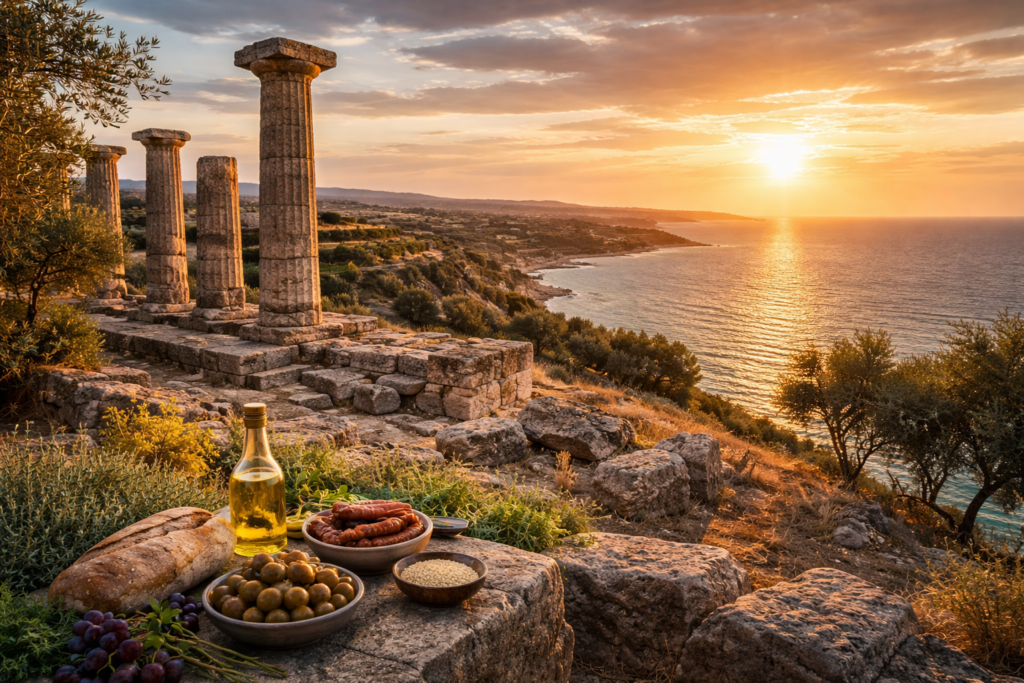
Calabria was once Magna Graecia, Greater Greece. From roughly 700 BCE, Greek settlers established colonies along the Ionian and Tyrrhenian coasts: Kroton (modern Crotone), Rhegion (Reggio Calabria), Lokroi, and Sybaris. These weren’t outposts. They were thriving city-states that, at their peak, rivaled Athens in culture and intellectual output.
The culinary imprint is still visible today, if you know where to look.
The use of oregano, wild fennel, and sesame in Calabrian cooking traces directly to Hellenic influence. So does the tradition of preserving food in oil, the cultivation of olives and grapes on steep hillside terraces, and the philosophical emphasis on fermented and aged products. Even the word ‘nduja, the fiery spreadable salume that has conquered restaurant menus from London to Los Angeles, has disputed etymology connecting it to Greek and later Norman food traditions.
Calabrian cuisine isn’t just ‘Southern Italian food.’ It’s a culinary palimpsest: layer upon layer of civilization, each one leaving traces in how people grow, cook, and eat here.
‘Nduja: The World’s Most Misunderstood Export
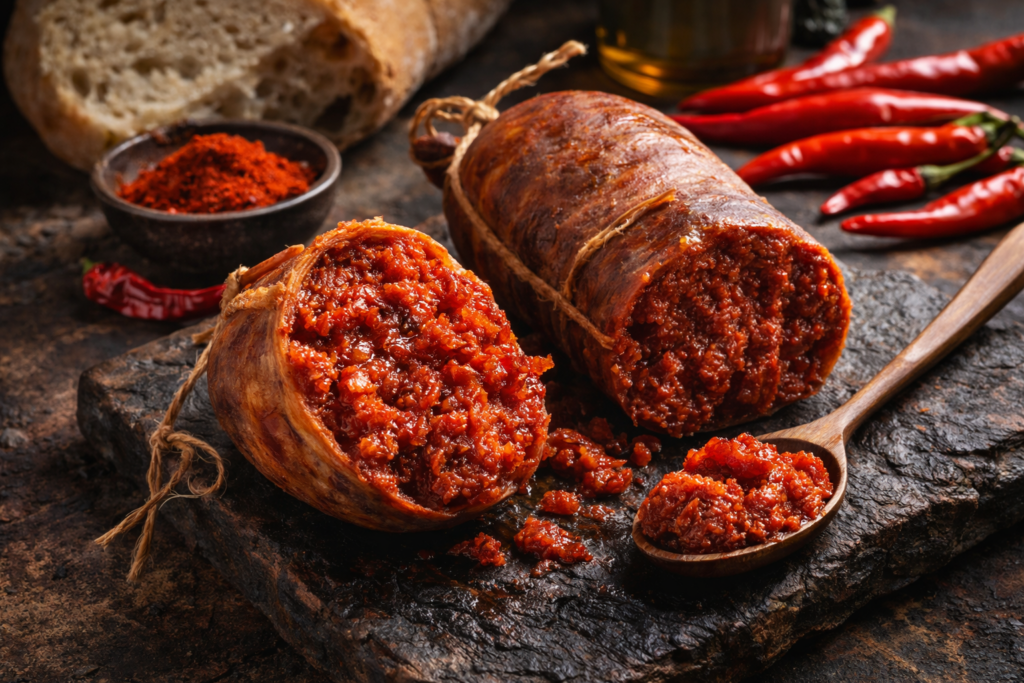
Let’s start with what most people already know, or think they know.
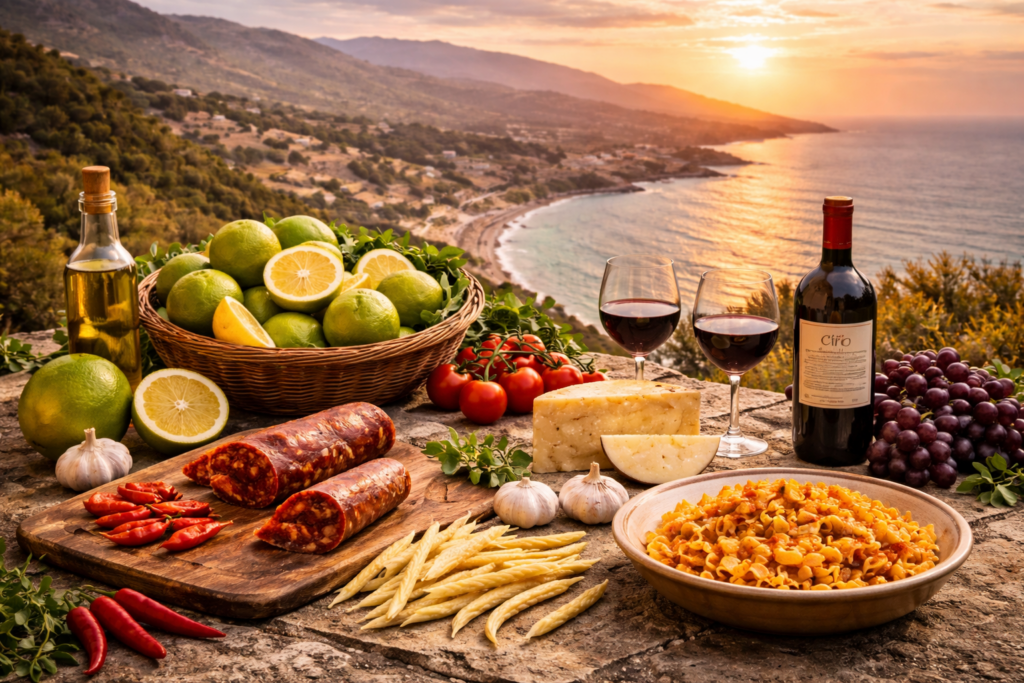
‘Nduja (pronounced en-DOO-ya) is a soft, spreadable pork salume from the town of Spilinga, in the Vibo Valentia province of Calabria. It’s made from offcuts of the pig: shoulder, belly, fatback blended with Calabrian peperoncino (chili) and stuffed into casings to cure. The result is something at once intensely fatty, saline, smoky, and incendiary.
Outside Calabria, ‘nduja is often treated as a spicy novelty ingredient, a pizza topping, a pasta hit, a trendy charcuterie board inclusion. Inside Calabria, it’s something else entirely: a staple, a cultural artifact, and a functional preservation technique developed in a region where poverty historically demanded nothing be wasted.
The version most people encounter outside Italy is a domesticated, shelf-stable approximation. The real thing, made by producers in Spilinga using heritage-breed Calabrian pigs and local peperoncino grown in volcanic soil, is in a different category altogether. More complex, more alive, with a depth of flavor that no export version fully replicates.
This is the gap between knowing about Calabrian food and actually experiencing it. It’s a gap that culinary travelers are increasingly motivated to close.
Bergamot: The Fragrance of the Mediterranean Coast
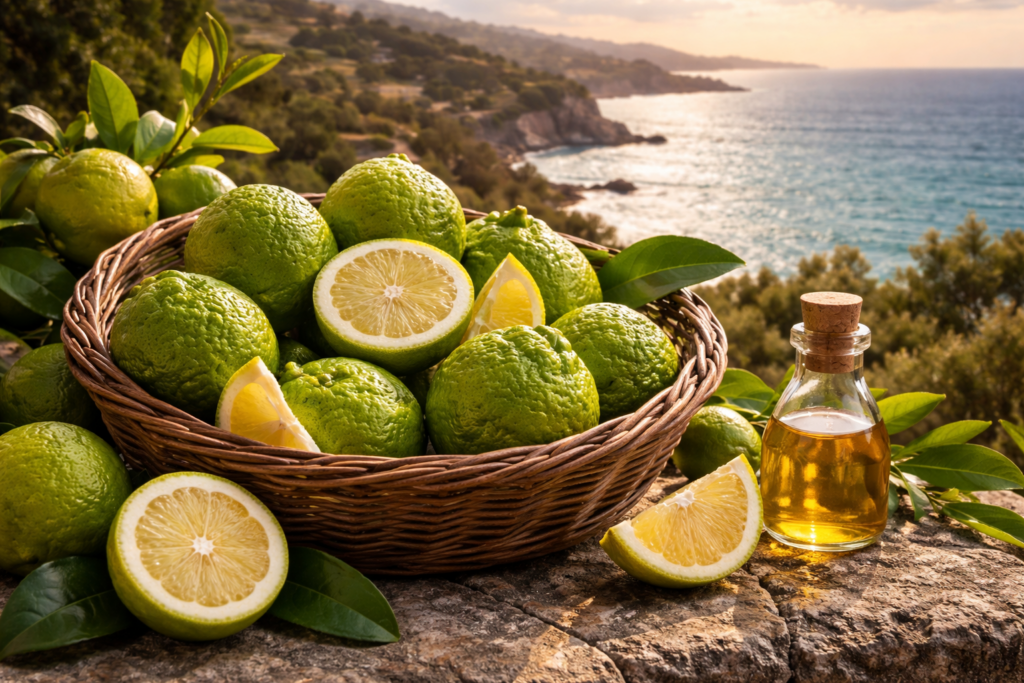
If ‘nduja is Calabria’s most famous culinary export, bergamot is its most misunderstood one.
Bergamot (Citrus bergamia) is a fragrant citrus fruit grown almost exclusively in a narrow coastal strip around Reggio Calabria, on the very tip of the peninsula. Its essential oil is the defining ingredient in Earl Grey tea and is used extensively in high-end perfumery; it’s what gives Chanel No. 5 a significant part of its character. More than 80% of the world’s bergamot supply comes from this single small region.
As a food ingredient, bergamot remains severely underexplored outside Calabria. Local producers use it in marmalade, liqueurs, honey infusions, pastry creams, and increasingly in contemporary fine dining; whole segments of bergamot are incorporated into raw fish dishes, bergamot-cured meats, and bergamot-forward digestifs.
The flavor is arrestingly complex: bitter, floral, citrusy, with an aromatic persistence that lingers. It’s not for every palate, but for culinary travelers with sophisticated taste, bergamot represents one of the most genuinely distinctive flavor experiences available in Italy, and one almost impossible to access authentically outside the region.
Fileja: The Pasta That Tells a Story
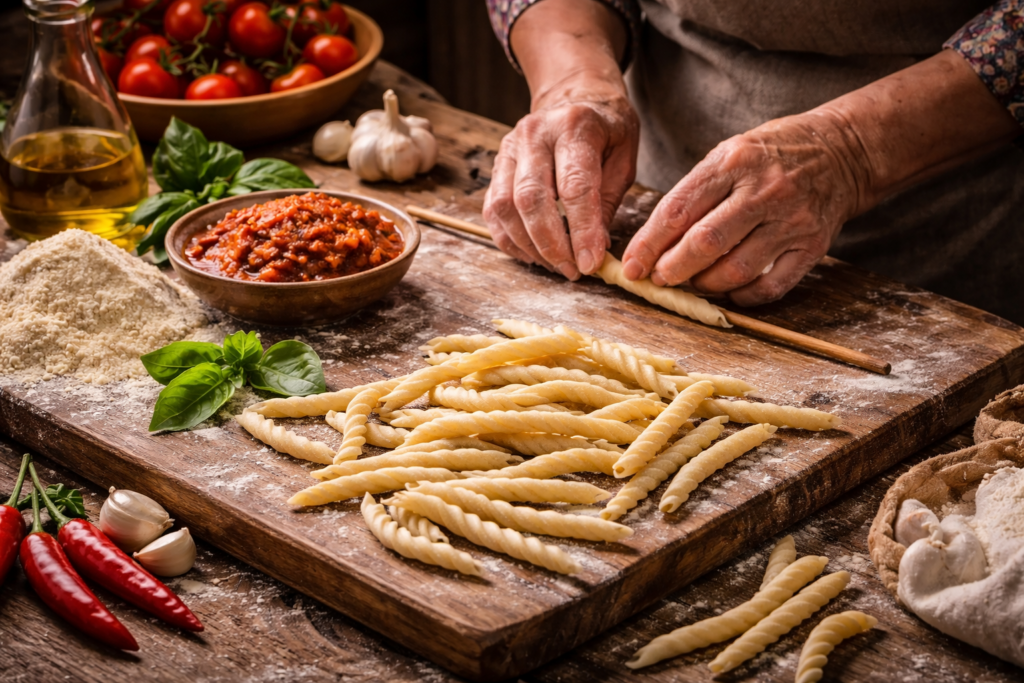
Italian pasta culture is littered with regional shapes that carry centuries of context. Fileja is Calabria’s most emblematic.
Fileja (also spelled fileja or filei) is a hand-rolled pasta from the Vibo Valentia area, made traditionally from durum wheat semolina and water, no eggs, and shaped by rolling the dough around a thin metal or wooden rod (the fileja stick) to create a hollow, elongated spiral. The technique is distinctly pre-industrial: each piece is shaped individually, by hand, in a motion that has changed virtually nothing in hundreds of years.
The shape isn’t decorative. It’s functional. The spiral structure and hollow core trap sauces, particularly the thick, oil-rich ragùs and ‘nduja-based sauces of Calabrian cooking, in a way that produces a completely different eating experience from dried pasta. The texture is firm with genuine chew. The flavor of the semolina comes through.
Watching fileja made by hand in a Calabrian masseria kitchen is one of those experiences that reframes how you think about pasta entirely. It’s also one of the experiences the Calabria Food Fest is specifically designed to create.
The Ionian Coast: Calabria’s Culinary Heartland
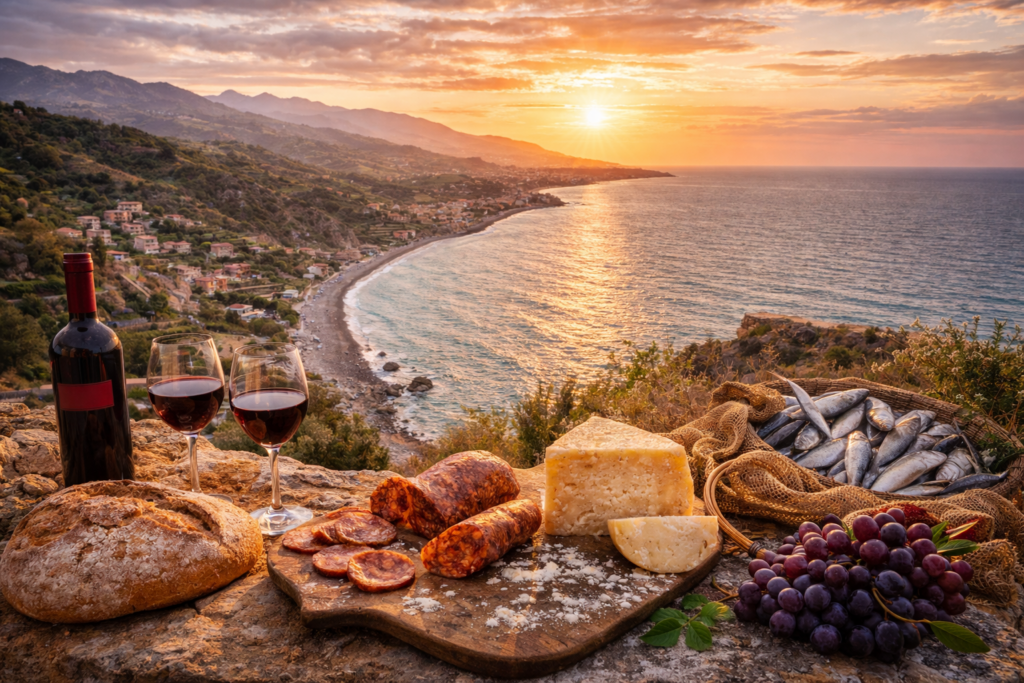
Calabria has two coastlines: the Tyrrhenian to the west, and the Ionian to the east. They produce distinct culinary cultures.
The Ionian coast is where the Greek inheritance runs deepest. The villages of the Locride, Gerace, Brancaleone, and Bova are places where Byzantine-era bread-baking traditions survive, where the seasonal fishing calendar still shapes the local diet, and where the inland mountains meet the sea in a way that makes for some of the most biologically diverse and culinarily interesting terrain in Southern Italy.
It’s also the heart of Calabrian wine country. The Cirò DOC, centered on the Ionian coast, produces wines from the Gaglioppo grape that were reportedly offered to Greek athletes at the ancient Olympics. Cirò Rosso Classico Superiore, a deep, tannic, powerfully aromatic red, is arguably the most historically significant wine in Italy, and one of the least known internationally.
Inland from the Ionian coast, the Sila and Aspromonte mountain ranges add further complexity. Wild mushrooms, chestnuts, aged pecorino, and artisanal products from a new generation of young producers, the mountains of Calabria have a food culture that is genuinely distinct from the coast, and increasingly the subject of serious culinary tourism attention.
Le Montagne del Sole: Where the Mountains Meet the Mission
Le Montagne del Sole, The Mountains of the Sun, is a Calabrian tourism project born directly from the Calabria Food Fest’s vision: that the region’s interior, its highland producers, and its living artisanal traditions deserve the same international visibility as the coast.
The brand connects culinary travelers with small-batch producers, family-run agriturismos, and experiences at the intersection of gastronomy and landscape. Think: truffle hunting at dawn in the Sila, a private lunch at a masseria where the cheese on the table was made that morning, a guided tasting of aged ‘nduja from a producer whose family has been curing pork the same way for four generations.
Le Montagne del Sole is also a statement about the future of Calabrian tourism. Not mass-market beach tourism, which the region has long and somewhat reluctantly accommodated, but high-value, low-volume culinary travel that brings economically meaningful visitors to the communities and producers who are preserving Calabria’s food heritage.
It is, in the most direct sense, the territorial dimension of what the Calabria Food Fest is trying to accomplish.
The Calabria Food Fest: Why This Is the Definitive Experience
There’s no shortage of food festivals in Italy. What makes the Calabria Food Fest different is its scope, its depth, and what it’s demonstrably accomplished.
In 2025, CFF generated:
- 40M+ influencer reach across content creators, travel journalists, and culinary media
- 32M social media interactions across Instagram, TikTok, and YouTube
- Official backing from the Italian Ministry of Tourism, recognition that CFF is operating at national significance, not just regional interest.
These aren’t vanity metrics. They’re evidence that the rest of the world is starting to understand what Calabrians have always known: this region’s food culture is world-class, and it has been under-documented and under-experienced for too long.
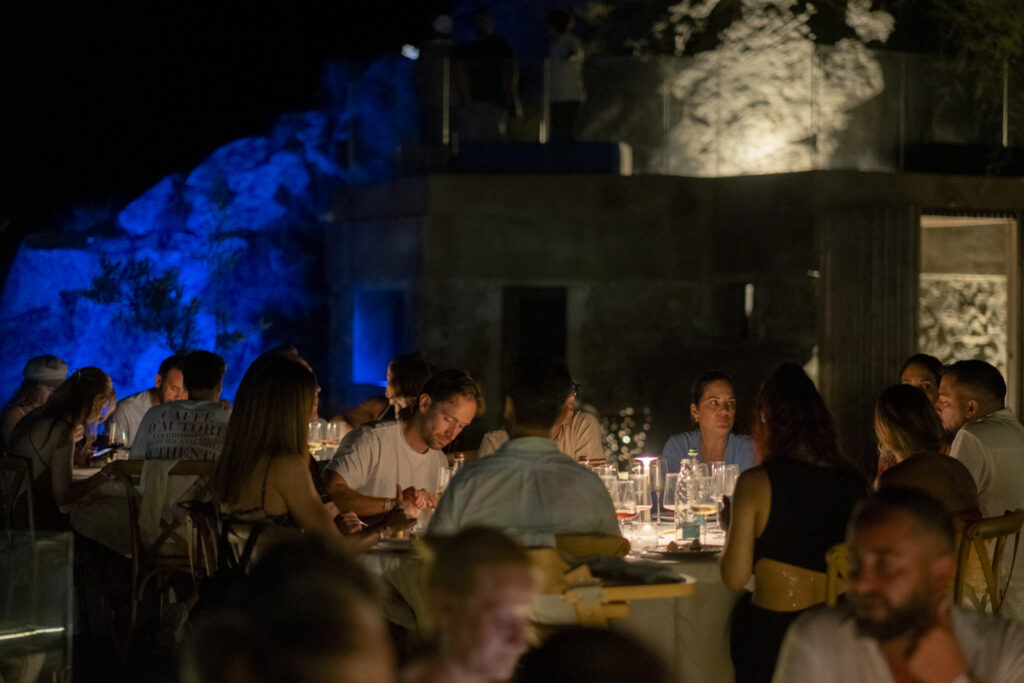
CFF is structured around immersion. Not a tasting tent, not a cooking demo stage. Actual access: to producers, to kitchens, to tables, to the people who grow, cure, ferment, and cook the ingredients that define this cuisine.
Attendees in past editions have:
- Harvested bergamot alongside producers on the Reggio Calabria coastal groves
- Made fileja by hand in a working masseria kitchen with a nonna who has been making pasta since the 1960s
- Attended private dinners in historic palazzi with menus built entirely from Calabrian DOP and IGP products
- Gone behind the scenes at ‘nduja producers in Spilinga to understand the curing process from pig to jar
- Tasted vertical flights of Cirò from producers who rarely export beyond the province
The Calabria Food Fest is not a food event. It’s a culinary travel format, designed to give serious food travelers the kind of access and depth that independent travel rarely offers.
Why 2026 Is the Moment to Go
Culinary travel to Southern Italy is growing, but Calabria remains ahead of the discovery curve. That’s a window, and it won’t stay open indefinitely.
The combination of factors currently converging is unusual:
- International culinary media have been increasingly focused on Calabria since 2023, with coverage in outlets including the New York Times Travel section, Condé Nast Traveler, and Food & Wine
- A new generation of Calabrian producers, many with international training and a deliberately artisanal approach, is reshaping what the region offers at the high end
- Ministry of Tourism recognition has formalized CFF’s role in Italy’s national culinary tourism infrastructure
- Flight access to Lamezia Terme and Reggio Calabria has expanded, making the region meaningfully more accessible from Northern Europe and, increasingly, from North America via connecting hubs
Experiencing Calabria now, through an event like CFF, with the access and curation it provides, is experiencing a region at the exact moment it’s moving from a hidden gem to a recognized destination. That is, historically, when the most meaningful travel happens.
Join the 2027 Waitlist
CFF 2026 attendance is limited by design. The immersive format that makes this experience what it is depends on keeping participant numbers small. Spots on the 2027 waitlist are open now.
If you’re a culinary traveler, journalist, content creator, or brand looking to experience
About the Calabria Food Fest
The Calabria Food Fest (CFF) is a gastronomic tourism festival and cultural event dedicated to the preservation and global promotion of Calabrian food heritage. Backed by the Italian Ministry of Tourism and anchored in the landscapes of Calabria’s Ionian coast and mountain interior, CFF brings together the region’s most important producers, chefs, and storytellers for an immersive multi-day experience that has no direct equivalent in Italy.
CFF is the home of Le Montagne del Sole, a project and territorial initiative connecting high-value culinary travelers with the artisanal heart of Calabrian food culture. Calabrian food culture at depth, this is where that starts.→ Join the 2026 Waitlist / Get in Touch